If you are deciding between Birmingham and Bloomfield Hills, you are not just picking a home. You are choosing the pace, setting, and feel of your everyday life. Both addresses are well known in the Birmingham area luxury market, but they offer very different experiences, and understanding those differences can make your decision much clearer. Let’s dive in.
Start With the Big Difference
At a high level, Birmingham feels more compact and in-town, while Bloomfield Hills feels more private and residential. That contrast shows up in population, lot patterns, zoning, and the way daily life tends to unfold.
Birmingham reported an estimated 21,923 residents as of July 1, 2025, across 4.79 square miles of land, with a population density of 4,551 people per square mile. Bloomfield Hills is far smaller, with 4,460 residents counted in the 2020 Census across 5.0 square miles, along with 1,736 housing units and 1,610 households. In practical terms, Birmingham usually feels busier and more connected to nearby activity, while Bloomfield Hills tends to feel quieter and more tucked away.
Birmingham Lifestyle
In-town convenience
Birmingham often appeals to buyers who want a more active day-to-day rhythm. The city sits in southeast Oakland County and is bordered by Bloomfield Hills, Bloomfield Township, Beverly Hills, Royal Oak, and Troy, with Woodward Avenue running through the city and access to US-24, I-696, and I-75.
That location supports a lifestyle where dining, errands, parks, and events can feel more integrated into your week. Birmingham also has visible downtown and community programming, including input through the Birmingham Shopping District, summer movie nights at Booth Park, public art projects, and ongoing park planning and improvements.
A more compact residential fabric
If you picture neighborhoods with a tighter in-town pattern, Birmingham fits that image better. The city’s single-family zoning districts include minimum lot areas of 20,000, 9,000, 6,000, and 4,500 square feet, depending on the district.
The city’s planning direction also emphasizes aligning zoning with existing homes and avoiding new houses that feel out of character. For you, that can mean a residential setting that balances established neighborhood feel with a strong connection to town.
Who tends to prefer Birmingham
Birmingham is often a strong fit if you are looking for:
- A more walkable downtown context
- Easier access to shops, dining, and local events
- A home base that feels connected to daily activity
- A neighborhood pattern with smaller lots than estate-style communities
For some buyers, that convenience is the deciding factor. If you like being close to the action, Birmingham can feel effortless.
Bloomfield Hills Lifestyle
Privacy and residential calm
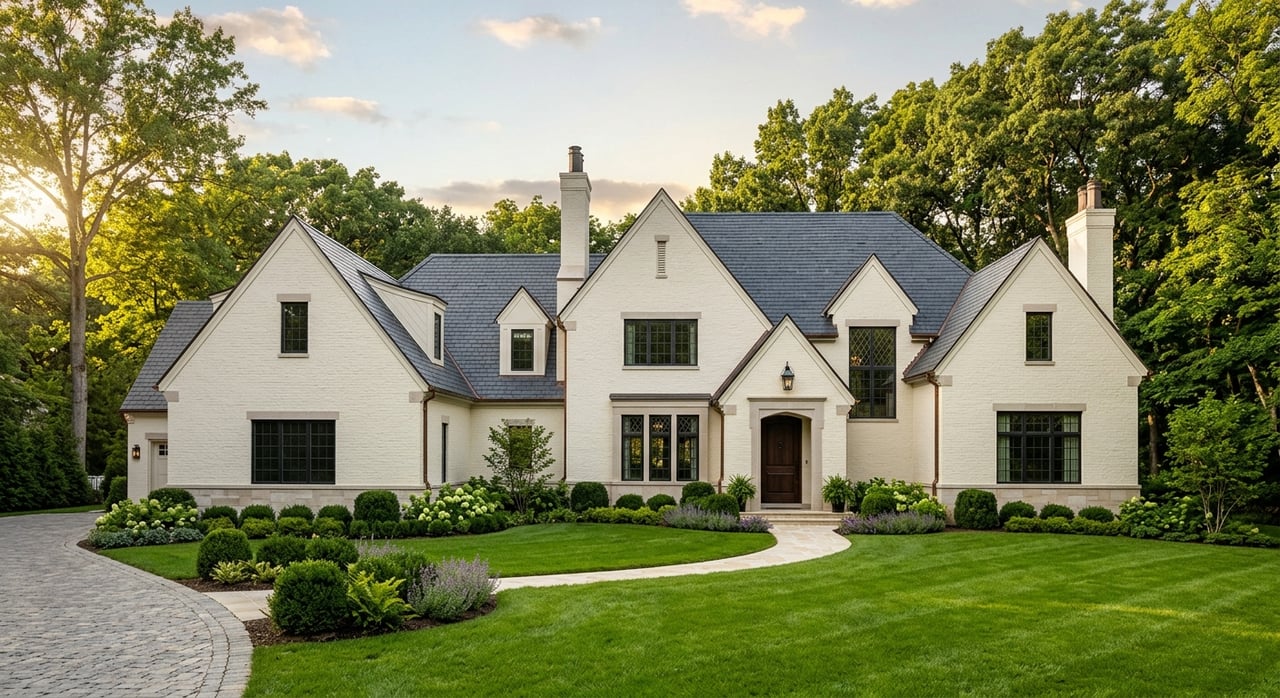
Bloomfield Hills offers a very different atmosphere. The city describes itself as a community that values quiet, rural residential properties, wooded lots, privacy, and stately homes.
That description matters because it reflects how the city plans for its future. Its master plan centers on land-use pattern, density, infrastructure investment, and conservation of natural features, which supports a lower-density and more secluded residential experience.
Larger lots by design
The clearest divider between Birmingham and Bloomfield Hills is lot size. Bloomfield Hills zoning is intentionally protective of residential scale and restricts commercial business in residential areas.
Its one-family districts require minimum lots of 2 acres and 200 feet of width, 1.5 acres and 175 feet, 1 acre and 150 feet, or 0.75 acres and 125 feet. Compared with Birmingham’s zoning, that is a major difference, and it shapes everything from privacy to streetscape to the amount of breathing room around a home.
A retreat-like setting
Bloomfield Hills is centrally located in the Detroit and Oakland metro area and is about 20 miles northwest of Detroit. The city notes convenient access to shopping districts, dining, and cultural attractions, but the community itself is not built around an urban core.
For you, that often means Bloomfield Hills functions more as a residential retreat. Amenities are nearby in the broader metro, but home life tends to feel quieter, more car-oriented, and more separated from commercial activity.
Who tends to prefer Bloomfield Hills
Bloomfield Hills is often a better fit if you are looking for:
- Larger lots and more separation between homes
- A quieter residential environment
- Wooded settings and greater privacy
- A more estate-like feel with fewer commercial intrusions
If your top priority is space and a calm setting, Bloomfield Hills often stands out quickly.
Compare Daily Living
Walkability and activity
If you want frequent nearby outings, Birmingham generally has the edge. Its downtown programming, parks, and public art contribute to a more event-driven pattern.
Bloomfield Hills offers a different kind of appeal. It is convenient to surrounding destinations, but the city’s identity is more about the residential setting itself than about a concentrated downtown experience.
Lot size and privacy
If privacy is at the top of your list, Bloomfield Hills is the stronger match by a wide margin. Minimum lot sizes start at three-quarters of an acre and go up to two acres in its one-family districts.
Birmingham offers a much tighter range, from 4,500 to 20,000 square feet in its single-family districts. That difference is one of the most practical and immediate ways to narrow your search.
Pace of life
Birmingham often supports a more flexible and convenience-driven routine. You may find it easier to combine errands, dining, and community events into a normal weekday or weekend.
Bloomfield Hills tends to support a slower residential rhythm. Many buyers value that retreat-like quality and see it as a major reason to choose the address.
Think About Long-Term Value
Both communities have scarcity working in their favor, but for different reasons. Birmingham’s scarcity is tied to its compact footprint and downtown convenience.
Bloomfield Hills draws value from its larger-lot zoning and low-density land-use framework. If you are thinking long term, it can help to ask yourself which kind of scarcity matters more to you: access and in-town convenience, or land, privacy, and a more secluded setting.
Questions to Ask Yourself
Before you decide, try narrowing the choice with a few honest questions:
- Do you want your home to feel connected to town or set apart from it?
- How important are larger lots and added privacy?
- Would you rather have a more active nearby routine or a quieter residential base?
- Are you drawn to a compact neighborhood pattern or a more estate-like setting?
These questions often bring the answer into focus faster than comparing square footage alone. The right address is usually the one that fits how you want to live every day.
Choosing With Confidence
There is no one-size-fits-all winner between Birmingham and Bloomfield Hills. Birmingham often wins for buyers who want convenience, activity, and a more in-town setting, while Bloomfield Hills often wins for buyers who want privacy, land, and a distinctly residential atmosphere.
The key is matching the address to your lifestyle, not just the listing. When you understand how each community is designed to function, you can buy with much more confidence.
If you are weighing Birmingham against Bloomfield Hills and want thoughtful, hyperlocal guidance, Meredith Colburn can help you compare the lifestyle, lot character, and market fit of each address with clarity.
FAQs
What is the main difference between Birmingham and Bloomfield Hills?
- Birmingham is generally more compact and in-town, while Bloomfield Hills is more private, low-density, and residential in character.
Which city has larger residential lots, Birmingham or Bloomfield Hills?
- Bloomfield Hills has larger lots by a wide margin, with one-family districts starting at 0.75 acres and going up to 2 acres, while Birmingham single-family districts range from 4,500 to 20,000 square feet.
Which address feels more walkable, Birmingham or Bloomfield Hills?
- Birmingham typically feels more walkable and event-driven because of its downtown context, parks, public art, and community programming.
Is Bloomfield Hills more private than Birmingham?
- Yes. Bloomfield Hills is defined by larger lots, wooded settings, fewer commercial intrusions, and a quieter residential feel.
What supports long-term value in Birmingham and Bloomfield Hills?
- Birmingham’s value story is tied to its compact footprint and downtown convenience, while Bloomfield Hills is supported by larger-lot zoning and a low-density residential framework.